

Delve Survivors Combat, Skills, and Build Planning
Understand how Delve Survivors movement, automatic attacks, cooldown skills, area effects, status effects, summons and gear work together.
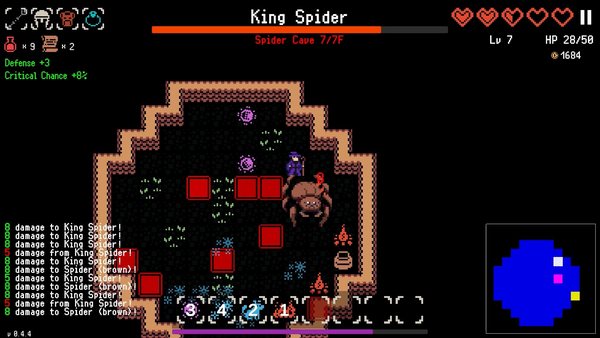
A Delve Survivors build combines positioning with automatic timing. Movement advances the turn clock, melee attacks occur when entering an enemy tile, and equipped skills activate after cooldowns; the practical goal is to make those effects cover the same combat problem instead of collecting unrelated bonuses.
One clock controls movement and skills
Every action advances time, so a step is also a cooldown decision. Moving into an enemy tile performs the melee strike; other equipped skills activate automatically when their cooldown completes. A safe square can therefore be more valuable than the shortest path if it lets an important effect come online without surrounding the character.
Combine effects around a shared purpose
The official feature list names area attacks, status effects and summons. Area effects address dense groups, status effects change how threats behave, and summons add another source of pressure or space. Gear is most useful when its statistics or enchantments strengthen the layer that already carries the build.
Read the effect before the rarity
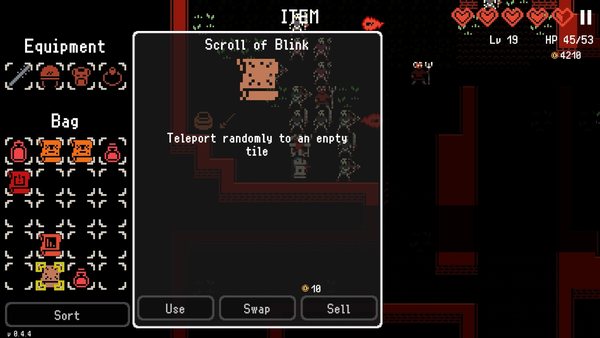
Magic, Rare, Legendary and Unique items can improve statistics, abilities and synergy. The August Demo update also added new Legendary Enchantments. Neither the store nor the update publishes a complete affix table, so fixed tier rankings and exact best-in-slot claims would be premature.
Prepare for three encounter levels
Each dungeon is described as containing elite enemies, a mid-level boss and a final boss. The developer specifically frames these encounters around resource management, build synergy and positioning. Carry consumables when available, avoid spending every resource before the final floor and keep a route open when the arena allows it.
Separate run choices from persistent upgrades
Dungeon skills and randomized loot shape the current run, while the Town Hub upgrades weapons, armor and class-based statistics between dungeons. Shared items stay inside the same game mode, so comparisons should always state whether the character belongs to Casual, Casual Rogue or Hard Core.
What still needs the release build
The official material does not provide a complete class roster, skill database, cooldown table, damage formula or boss move list. Those belong in future versioned databases after the November 12 release rather than being inferred from promotional screenshots.